
Communication can be broadly categorized into several types:

Digital Communication: This encompasses communication that takes place through digital platforms, such as social media, emails, and messaging apps.
Verbal Communication: This involves the use of spoken or written words. It includes face-to-face conversations, phone calls, and written correspondence like emails and texts.

Nonverbal Communication: This includes body language, facial expressions, gestures, and eye contact. Nonverbal cues can often convey emotions and attitudes more powerfully than words.

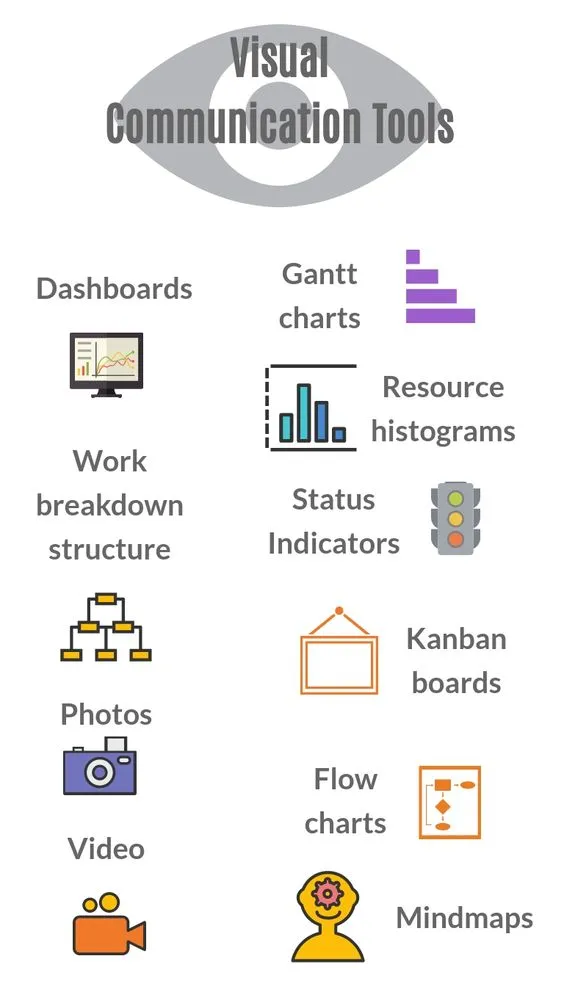
Visual Communication: This involves the use of visual elements to convey information. Examples include charts, graphs, images, and videos. It’s often used in presentations and advertising.
Formal Communication: This follows a specific structure and is often used in professional settings. Examples include official reports, meetings, and memos.

Informal Communication: This is more casual and occurs in everyday interactions. It can happen among friends, family, or colleagues in a relaxed environment.
Bad Communication Habits (And How To Break Them)
- Interrupting Others
Bad communication habits are often something that we are not aware of in ourselves. One bad habit that is often overlooked is interrupting others. Interrupting others does not allow them to finish their thought and can make them feel unheard or ignored. It can also make them less likely to want to speak up next time they have something important to say.
- Speaking Too Fast Without Pausing
A bad communication habit is speaking too fast and not pausing to give listeners the opportunity to digest what was said or to ask questions. In our desire to share as much information as possible within the given time, it is easy to forget that silence between various ideas or bits of information that we present is a necessary component of great communication. It’s especially important to pause after asking a question.
- Assuming Others Understand You
It is important to understand that just because you say something does not mean that the other person understands it the way you mean it. You need to be congruent with your tone, body language and other levels of communication. It is important to communicate as clearly as possible and to leave no room for guessing or interpretation, as we are all biased. Always practice nonviolent communication.
- Giving Advice Without Listening
People are always willing to give advice, which is not always the best. The reason for this is that they have not listened. When in a conversation, my clients may find that they are able to “talk well,” but when it comes to listening, their internal chatter tends to pour out as interruptions when it’s the other person’s time to talk. I try to get my clients to listen more and speak less.
- Using The Word ‘Should’
One bad habit is using the word “should”—both in reference to personal obligations on a to-do list and when talking to others. To break the habit, it’s helpful for clients to understand the emotional weight and cost of “should-ing.” In terms of motivation, it’s using the “stick” instead of the “carrot.” The next step is to substitute different words such as “get to,” “want to,” “intend to,” “commit to” or “plan to.”
- Talking Too Much Instead Of Engaging And Connecting
CEOs commonly overcommunicate, spending most of their time talking rather than seeking to engage, connect or support others. They should ask themselves what their role really is and how they can be more effective in rallying others. Have they considered using more questioning and storytelling skills to enhance engagement and understanding and instill ownership in others?
- Using Scripts Or Canned Responses
One common bad habit in in-person, or even online, communication is using scripts or canned responses. A lot of times on sales calls or in sales conversations, the representative is too focused on the script and getting the sale versus actively listening. Ditch the script and turn on your active listening skills so that you can actually listen and answer as the expert you are.
- Avoiding In-Person Communication
Avoiding in-person communication is a poor habit. Instead, they constantly email or message. The problem is that the person on the receiving end does not know the context or urgency, so often, it leads to frustration on both ends and wastes time.
- Lacking True Listening Skills
One of the bad communication habits that clients aren’t aware of is lacking listening skills. Most people listen to confirm their own beliefs and do not truly listen. In order to truly listen, one needs to adopt the habit of “seeking first to understand, then to be understood.”
- Always Having To Be Right
A common bad habit is always having to be right and win the argument, regardless of its negative impact on winning others over. People grow successful because of their cunning ability to get it right in terms of decisions and conversational chemistry; changing the focus from winning an argument and protecting a position to sharing, connecting and creating space for building together creates winning partners for the long haul.
- Failing To Be Present During A Conversation
One common habit is not being present. With competing distractions and priorities, we can sometimes miss important cues and opportunities to connect on a deeper level. Remove distractions, practice active listening (really listen), ask thoughtful questions and be genuinely interested. Be mindful in the moment.
- Casually Overusing The Word ‘Sorry’
The No. 1 bad communication habit I observe in women is the overuse of “sorry.” Instead of saying “sorry for the delay,” I encourage women to say “thank you for your patience” or simply nothing at all. Let’s save “sorry” for when we really mean to apologize. Apologies become hollow when they’re handed out like candy on Halloween. Worse, they diminish our power, presence and perceived competence.