
We encounter fake news daily. Therefore, it is essential to identify which information is false to avoid making hasty conclusions and to prevent unquestioning belief in all information presented.
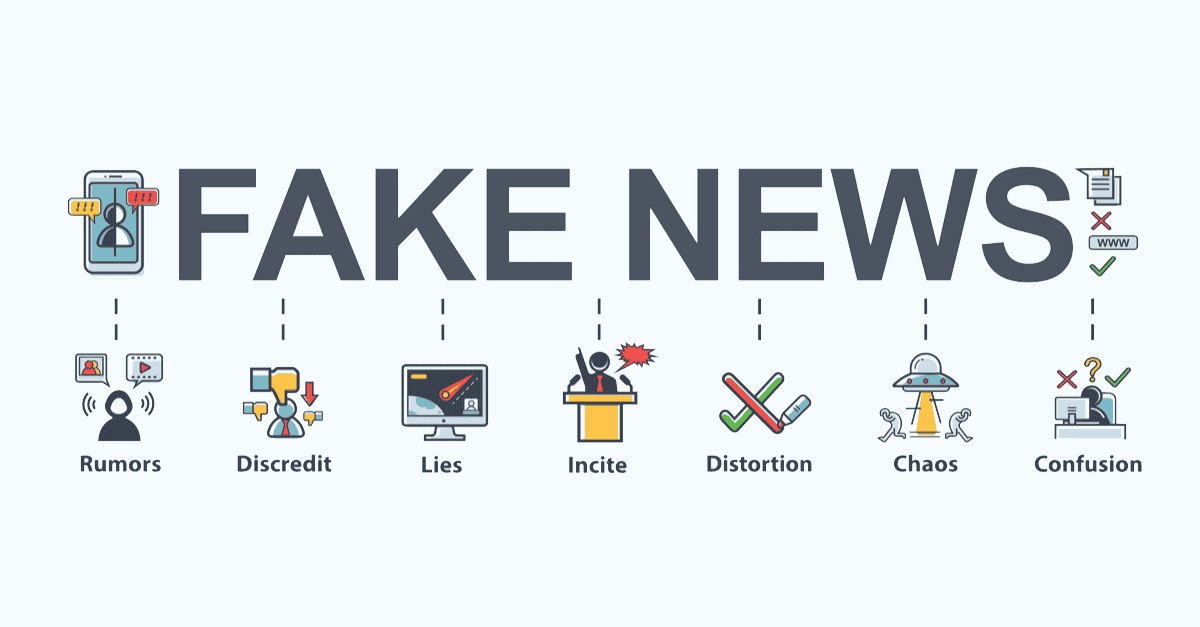
Fake news refers to information that is false or misleading, presented as if it were legitimate news. It can take many forms, including entirely made-up stories, manipulated images, and distorted facts. Often, fake news is created with the intent to misinform, manipulate, or influence public opinion. It can be spread intentionally by individuals or organizations trying to push a specific agenda, or unintentionally by people who share stories they believe to be true without verifying the facts.
Legitimate websites often end in ".com," ".org," or ".net," but these endings alone don’t guarantee credibility. Common domain endings:
- .com: It's "commercial" and is one of the most widely used domains for general and commercial websites. Many reliable news and business sites use this extension, but so do some less credible sites.
- .org: Often used by nonprofit organizations, advocacy groups, and educational resources. While many ".org" sites are reliable, some may still have biases or specific agendas.
- .net: It's originally for network-related businesses but now used more broadly. Some reliable sites use ".net," though it’s less common for major news sources.
- .gov: Reserved for government websites in the United States, and it’s typically trustworthy as it provides government-published information (e.g., "usa.gov").
- .edu: Used by accredited educational institutions, mainly in the United States. These sites are generally reliable, especially for research and educational information.
Some fake news sites may also mimic credible URLs, adding subtle differences, like “.com.co” instead of just “.com.” So always double-check the URL and look up the site if you’re unsure of its legitimacy!
If you would like to check fake news I would like to recommend those 2 sites:
Mongolian Fact-Checking Center – https://mfcc.mn
Media Bias/Fact-Checking – https://mediabiasfactcheck.com